
Clearing the Clutter: Out with the Old Cable in Manchester
When taking on an office refurbishment, what sits behind the service cupboard doors and above ceiling tiles is often an entirely different story from the fresh paint and new desks out front. Over years of office moves, system upgrades, and quick fixes, redundant network and telecom wiring builds up fast—leaving riser cupboards overcrowded, airflow restricted, and future tracing a nightmare.
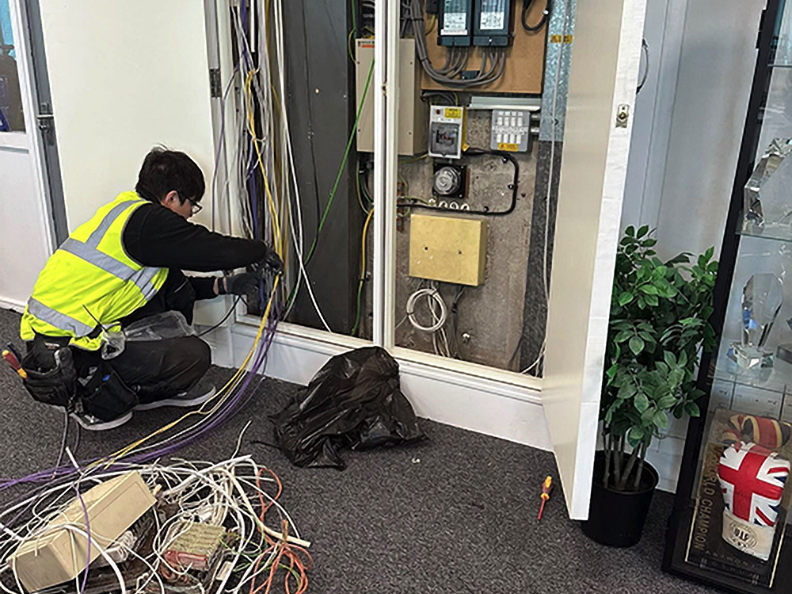
This week, two of our engineering team, Simon and Siby, were on-site in Manchester tackling exactly that: stripping out redundant cabling as part of an ongoing commercial refurbishment project.
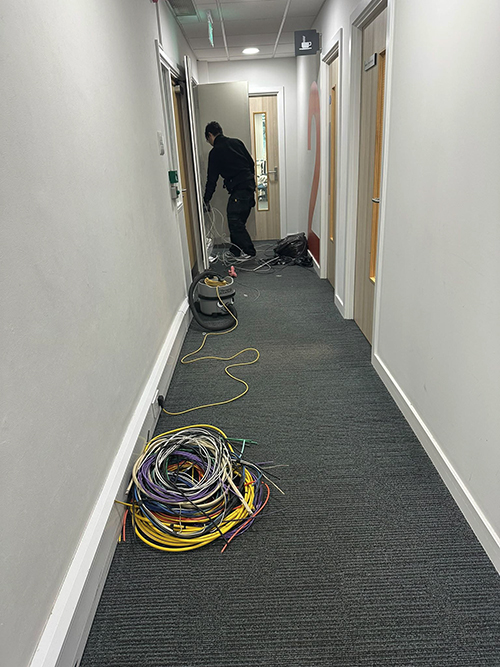
Clearing obsolete cable runs from the hallway risers.
What We Did On-Site
Working systematically through the electrical and data risers, the goal was simple: identify, trace, isolate, and carefully pull back dead runs without disturbing live building services.
● Careful Auditing & Isolation: Tracing legacy voice, data, and distribution cables back from containment to guarantee zero accidental downtime for live services.
● Safe Riser Strip-Out: Removing bundles of abandoned cabling from shared service cupboards and risers to free up much-needed basket and trunking space.
● Site Care & Clean-Up: Bagging cut ends, coiling salvageable runs, and hoovering containment bases and carpets as we went—keeping the workspace clean and safe for other trades working alongside us.
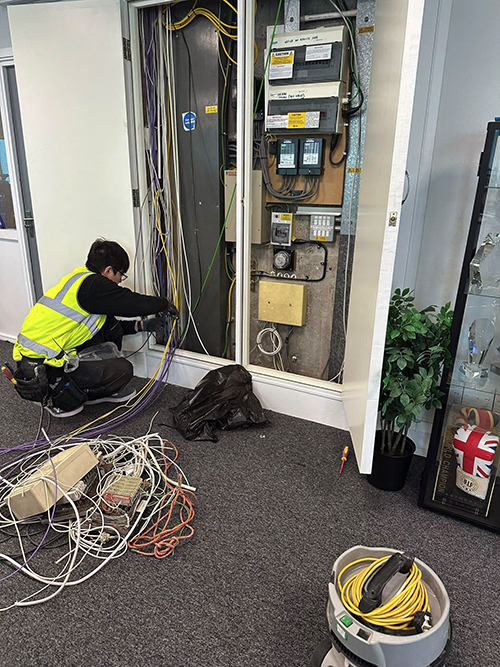
Simon and Siby methodically tracing and stripping out dead runs from the main riser cupboard.
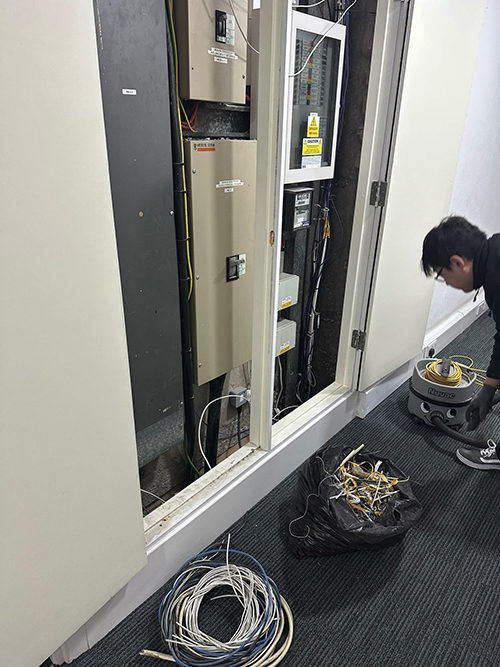
Open distribution board during cable auditing and removal.
Why Decommissioning Redundant Cable Matters
Leaving “dead” cabling in place might feel like an easy shortcut, but clearing it out offers real practical benefits:
1. Fire Safety & Compliance: Abandoned cables add unnecessary combustible fuel load to risers and ceiling voids.
2. Space for Upgrades: It clears room in baskets and risers for modern, high-speed Cat6A or fibre infrastructure.
3. Easier Maintenance: Troubleshooting network issues down the line is ten times quicker when engineers aren’t having to trace through a nest of inactive wires.
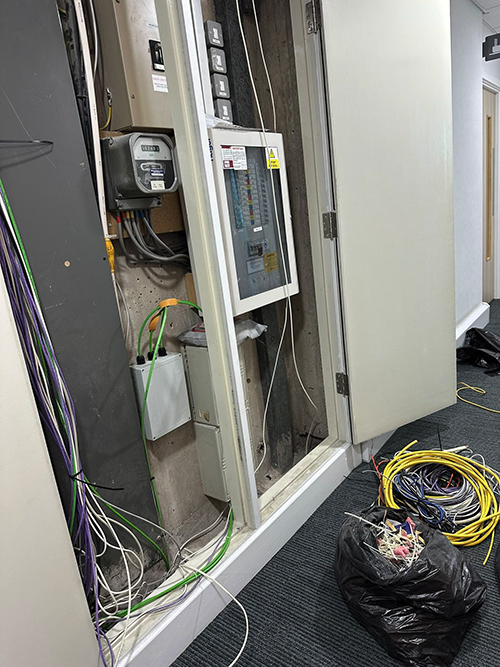
Site kept safe, hoovered, and tidy while work progressed.
A big shout-out to Simon and Siby for a tidy, efficient job getting the risers cleared out and ready for the next phase of the fit-out!
Need Your Cabling Infrastructure Sorted?
Planning an office move, refit, or need your risers and data cabinets brought back under control? Drop us a line to see how we can help keep your infrastructure clean, safe, and future-proof.


